Uniswap: Revolutionizing Decentralized Exchange
Uniswap is a decentralized exchange (DEX) protocol built on the Ethereum blockchain. It facilitates automated trading of decentralized finance (DeFi) tokens without the need for traditional order books. Developed by Hayden Adams, Uniswap launched in November 2018 and has quickly become a leading platform in the DeFi space, known for its innovative use of Automated Market Makers (AMMs).
How Uniswap Works: The Power of Automated Market Makers
At its core, Uniswap leverages AMMs to provide liquidity and enable trading. Unlike traditional exchanges that rely on buyers and sellers placing orders, Uniswap utilizes liquidity pools. These pools are essentially reserves of tokens locked in smart contracts, and traders interact with these pools to execute trades.
- Liquidity Providers (LPs): Users who contribute tokens to liquidity pools are known as liquidity providers. They deposit an equivalent value of two tokens (e.g., ETH and DAI) into the pool.
- Liquidity Pools: Each pool represents a trading pair (e.g., ETH/DAI). The pool's smart contract automatically adjusts token prices based on the supply and demand within the pool.
- Automated Trading: When a trader wants to swap one token for another, they interact with the pool's smart contract. The contract uses a mathematical formula (x * y = k) to determine the exchange rate. This formula ensures that the product of the two tokens' quantities remains constant, thereby setting the price.
- Fees and Incentives: Liquidity providers earn fees from trades that occur within their pools. These fees are distributed proportionally to their contribution to the pool, incentivizing them to provide liquidity.
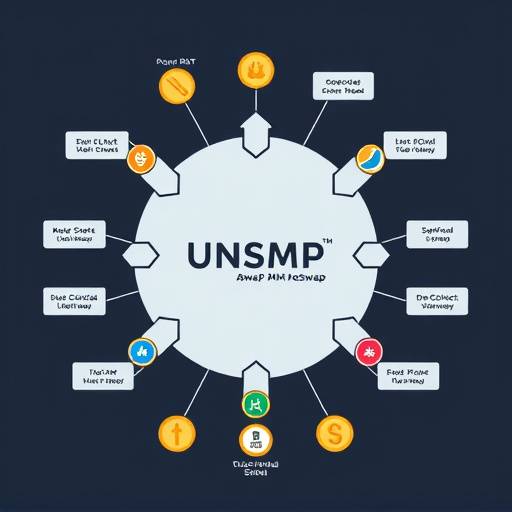
Understanding Liquidity Pools
Liquidity pools are the backbone of Uniswap. They are smart contracts that hold reserves of two different tokens, creating trading pairs. Here's a closer look at their significance:
- Constant Product Formula (x * y = k): This formula ensures that the price of a token changes based on its availability in the pool. If someone buys ETH using DAI, the supply of ETH decreases, and its price increases.
- Impermanent Loss: A potential risk for liquidity providers, impermanent loss occurs when the price ratio of the two tokens in a pool changes compared to holding them outside the pool. The greater the price divergence, the greater the potential loss.
- Providing Liquidity: LPs must deposit an equal value of both tokens in the pool. In return, they receive pool tokens (LP tokens) that represent their share of the pool. These tokens can be redeemed for their portion of the pool's assets plus any accumulated trading fees.

Uniswap Tokens and Governance
While Uniswap initially operated without a native token, the introduction of the UNI token in September 2020 marked a significant shift towards decentralized governance. The UNI token allows holders to participate in the protocol's decision-making process.
- UNI Token: UNI is a governance token that empowers holders to vote on proposals, protocol upgrades, and the allocation of treasury funds.
- Decentralized Governance: By distributing governance rights to the community, Uniswap aims to ensure that the protocol evolves in a transparent and democratic manner.
- Community Involvement: UNI holders can delegate their voting rights to other community members, fostering broader participation in the governance process.
Risks Associated with Uniswap
While Uniswap offers numerous advantages, it's essential to be aware of the potential risks:
- Impermanent Loss: As mentioned earlier, impermanent loss can erode the profitability of providing liquidity.
- Smart Contract Risks: Like any smart contract-based platform, Uniswap is susceptible to bugs or vulnerabilities that could be exploited.
- Regulatory Uncertainty: The regulatory landscape surrounding DeFi is still evolving, and changes in regulations could impact Uniswap's operations.
- Volatility: The value of cryptocurrencies can be highly volatile, which can affect the value of tokens held in liquidity pools.
The Future of Uniswap
Uniswap continues to evolve and innovate, solidifying its position as a leading DEX. Several trends and developments are shaping its future:
- Layer-2 Scaling Solutions: Integration with Layer-2 scaling solutions like Optimism and Arbitrum aims to reduce transaction fees and increase throughput, making Uniswap more accessible to a wider audience.
- Cross-Chain Compatibility: Exploring cross-chain compatibility could enable Uniswap to support tokens from multiple blockchain networks, expanding its reach.
- Advanced Trading Features: The introduction of features like limit orders and stop-loss orders could attract more sophisticated traders to the platform.
- Further Decentralization: Ongoing efforts to further decentralize governance and development will strengthen the community's role in shaping Uniswap's future.

FinTech Insights Group: Analyzing the DeFi Landscape
At FinTech Insights Group, located at 42 Innovation Drive, Suite 200, San Jose, CA 95113, we are dedicated to providing comprehensive analysis and insights into the rapidly evolving world of decentralized finance. Our team of experts, led by Dr. Anya Sharma and supported by senior analysts like Ben Carter, is committed to helping individuals and institutions understand the opportunities and challenges presented by platforms like Uniswap.
Dr. Sharma's expertise in blockchain technology and Ben Carter's deep understanding of financial markets make FinTech Insights Group a trusted source for unbiased and data-driven analysis. Contact us at (408) 555-0123 or email us at [email protected] to learn more about our research and consulting services.
For more information on our data protection practices, please refer to our Privacy Policy .
Conclusion: Uniswap's Impact on DeFi
Uniswap has revolutionized decentralized exchange by introducing the AMM model, enabling anyone to trade and provide liquidity for DeFi tokens in a permissionless and transparent manner. While risks exist, Uniswap's continued innovation and community-driven governance position it as a key player in the future of finance.